Peter Attia's book Outlive sold over two million copies. Bryan Johnson's "Blueprint" protocol became a media phenomenon. Longevity clinics are opening in every major city. Google searches for "longevity medicine" have more than tripled since 2020.
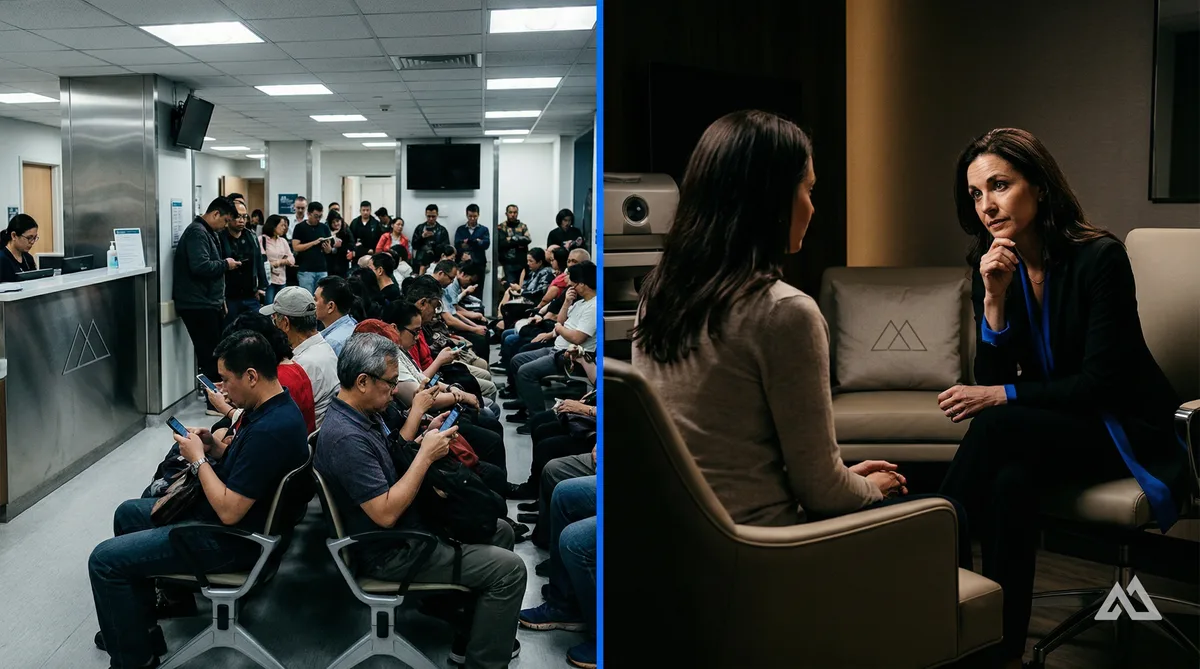
Something has shifted. A critical mass of people are realizing that modern medicine is extraordinarily good at keeping you alive once you are sick, but extraordinarily bad at keeping you from getting sick in the first place.
Longevity medicine exists to close that gap. But does the investment actually pay off? What does a longevity program include? And how do you separate the science from the hype?
As a physician who practices this every day at Rebel Health Alliance, I am going to give you a straight answer.
What Longevity Medicine Actually Is
Longevity medicine is a medical discipline focused on extending both lifespan (how long you live) and healthspan (how long you live well). Not anti-aging snake oil. Not cryotherapy chambers and IV drips. This is evidence-based medicine applied proactively rather than reactively.
The core premise is simple: most of the diseases that kill us — cardiovascular disease, cancer, type 2 diabetes, Alzheimer's — are not sudden events. They develop over 10 to 30 years before diagnosis. During that window, they are detectable through advanced testing and modifiable through targeted interventions.
Traditional medicine ignores that window. Your doctor waits until your fasting glucose hits 126 mg/dL to diagnose diabetes, even though insulin resistance was measurable a decade earlier. A landmark study tracking glucose trajectories over 12 years found that metabolic dysfunction begins progressing long before it crosses any diagnostic threshold (Tabak et al., The Lancet, 2009). You do not find out about atherosclerosis until you have a heart attack, even though your ApoB was elevated for years. Data from the Multi-Ethnic Study of Atherosclerosis (MESA) confirmed that elevated ApoB and coronary artery calcium predict cardiovascular events years to decades before they occur (Carr et al., Journal of the American College of Cardiology, 2005).
Longevity medicine operates in that window. The goal is to detect and intervene as early as possible, turning what would have been a disease into a data point that gets corrected.
The Four Pillars of Longevity Medicine
Every credible longevity program is built around four domains. The specifics vary by practitioner, but the framework is consistent:
1. Advanced Diagnostics
You cannot optimize what you do not measure. Longevity medicine begins with a depth of testing that goes far beyond anything you would receive in a standard physical.
This typically includes:
- 100+ biomarker blood panels covering metabolic, cardiovascular, hormonal, inflammatory, and nutritional markers
- Genetic testing (DNA analysis for disease risk, pharmacogenomics, and nutrient metabolism)
- Body composition analysis (not just weight, but lean mass, visceral fat, bone density)
- Cardiovascular imaging in some programs (coronary artery calcium score, carotid intima-media thickness)
- Continuous glucose monitoring to assess real-time metabolic response
The key distinction is that these are not one-time tests. They are tracked longitudinally so your physician can see trends, not just snapshots. A single fasting glucose reading tells you almost nothing. A trendline of fasting glucose, fasting insulin, HbA1c, and post-meal glucose responses over 12 months tells you everything.
2. Nutritional Optimization
Nutrition in longevity medicine is not about fad diets. The approach uses your data to determine what your specific body needs.
This means:
- Protein targets based on lean body mass and activity level (most people dramatically undereat protein, especially after 40)
- Micronutrient optimization based on blood and genetic testing (not guessing at supplements)
- Metabolic flexibility training through strategic meal timing and composition
- Gut health assessment and support where warranted
At Rebel Health Alliance, every member works with a dedicated dietitian who builds a nutrition protocol informed by their blood work and DNA results. This is not a generic meal template. Think of it as a personalized prescription for how you eat.
3. Exercise Programming
The research on exercise and longevity is not ambiguous. A 2022 meta-analysis published in the British Journal of Sports Medicine (Shailendra et al.) found that individuals who met both aerobic and strength training guidelines had a 40% lower risk of all-cause mortality compared to those who were inactive.
But the type, intensity, and structure of exercise matters enormously — and those demands change as you age. Longevity-focused exercise programming typically emphasizes:
- Resistance training (the single most important exercise modality for aging, preserving muscle mass, bone density, and metabolic health)
- Zone 2 cardio (sustained, moderate-intensity aerobic work that builds mitochondrial capacity)
- VO2 max training (high-intensity intervals that maintain or improve peak aerobic capacity, a top predictor of longevity)
- Stability and mobility work (reducing injury risk, maintaining functional independence)
Our members at Rebel Health Alliance work with dedicated strength coaches who program their training based on their health data, goals, and current capacity. A 45-year-old executive who has not trained in a decade gets a very different program than a 55-year-old who has been lifting for 20 years.
4. Hormonal and Metabolic Optimization
This is where longevity medicine diverges most sharply from traditional care.
In conventional medicine, hormonal decline is considered a normal part of aging. Your testosterone drops by 1 to 2 percent per year after 30, a decline documented in the Massachusetts Male Aging Study (Journal of Clinical Endocrinology & Metabolism, 2002). Your thyroid slows. Your DHEA declines. The standard medical response is: "That is normal for your age."
In longevity medicine, the question is different: Is this optimal? Normal-for-age and optimal-for-health are not the same thing. A 50-year-old man with a total testosterone of 350 ng/dL is technically "within range" by conventional standards, but may be experiencing fatigue, cognitive decline, loss of muscle mass, increased body fat, and reduced motivation.
Longevity physicians assess the full hormonal picture — total and free testosterone, estradiol, DHEA-S, cortisol, thyroid panel, SHBG, and insulin — and optimize based on symptoms and clinical targets rather than population-average reference ranges.
This does not always mean hormone replacement. Often, improvements in sleep, training, nutrition, and stress management are enough to move the needle. But when intervention is warranted, the process is done under close physician supervision with regular monitoring.
What a Longevity Program Costs
This is the practical question, and the honest answer is: it depends on the depth of the program.
| Program Level | Annual Cost | What Is Included |
|---|---|---|
| DIY / Self-directed | $500 - $2,000 | Order your own labs, follow books and podcasts |
| Mid-tier physician-led | $5,000 - $10,000 | Comprehensive testing, physician consultations, coaching team |
| High-tier longevity clinic | $15,000 - $25,000 | Above plus imaging, advanced diagnostics, specialist access |
| Concierge-level | $50,000 - $150,000+ | Fully bespoke, whole-body MRI, dedicated physician, 24/7 access |
The DIY approach is better than nothing, but it has real limitations. Without a physician interpreting your data, you are likely to miss important patterns, misinterpret results, or waste money on interventions that do not match your biology.
The concierge tier delivers extraordinary care, but is accessible to very few people.
Rebel Health Alliance sits in the mid-tier at $6,970 per year, delivering a full medical team — physician, dietitian, and strength coach — with access to over 3,000 diagnostic tests (the most comprehensive diagnostic assessment on the market), DNA testing, hormone optimization, and on-demand physician access. We built it this way because we believe the mid-tier is where the biggest gap exists between what people need and what is available.
The ROI of Prevention
Does longevity medicine pay for itself financially? Look at the numbers.
The average cost of a heart attack in the United States runs $200,000 to $500,000+ in medical expenses over the subsequent five years, according to data published by the American Heart Association. The average total medical expenditure for a person with type 2 diabetes is approximately $19,700 per year, per the American Diabetes Association's cost analysis. Cancer treatment ranges from $150,000 to over $1 million depending on the type and stage, per National Cancer Institute estimates.
Now consider that cardiovascular disease and type 2 diabetes are detectable 10 to 20 years before diagnosis through the biomarkers and testing that longevity medicine employs, and that several common cancers can be caught at earlier, more treatable stages through targeted screening.
Investing $7,000 per year in comprehensive monitoring and early intervention is not an expense. Measured against a $500,000 cardiac event or a chronic disease that costs $20,000 every year for the rest of your life, the math speaks for itself.
But the financial case is almost secondary. The real return is in quality of life.
Our members consistently report:
- More energy throughout the day
- Better sleep quality
- Improved body composition (more muscle, less fat)
- Sharper cognitive function
- Greater resilience to stress
- Renewed motivation and drive
Individual results vary based on starting health, adherence to protocols, and biological factors.
What to Expect in Your First 90 Days
If you are considering a longevity program, here is what the first three months look like at Rebel Health Alliance:
Weeks 1-2: Baseline Testing You complete your comprehensive blood panel — drawn from our library of over 3,000 diagnostic tests — along with your DNA test and health history questionnaire. This creates the dataset your medical team will use to build your protocol.
Weeks 3-4: Physician Consultation You sit down with one of our physicians for a detailed review of your results. Not a 7-minute summary — a thorough walk-through of what your data reveals, what your risk factors are, what is going well, and what needs attention. You leave with a personalized protocol.
Weeks 4-8: Protocol Implementation You begin working with your nutrition coach and strength coach to implement the changes. Protocols are designed to be sustainable, not extreme. We meet you where you are and build from there.
Weeks 8-12: Early Feedback Loop You start to feel the effects. Energy, sleep, and body composition are typically the first things to shift. Some members see measurable biomarker improvements in their first follow-up labs.
Ongoing: Continuous Access and Structured Reviews Your physician is available whenever you need them — message your doctor anytime. You also have scheduled touchpoints to review updated lab work and adjust your protocol. The program evolves as you do.
Separating Science from Hype
The longevity space has a hype problem. Between biohacker influencers, unregulated supplement companies, and celebrity protocols, distinguishing evidence-based medicine from expensive placebos takes effort.
My guidelines for evaluating any longevity program:
- Is a licensed physician directing your care? If not, walk away. Coaching and wellness programs have value, but they are not medicine.
- Are interventions based on your data? A good program tests first and prescribes based on results. A bad program sells everyone the same stack of supplements.
- Is progress tracked over time? One-time testing is a starting point. Longitudinal tracking is where the real value lives.
- Is the approach multi-modal? Longevity is not one thing. Nutrition, exercise, hormones, sleep, stress, and medical screening need to work together. Beware of programs that focus on one modality and ignore the rest.
- Are the expectations reasonable? Nobody is going to reverse your biological age by 30 years. Good longevity medicine produces measurable, meaningful, incremental improvements that compound over time.
Frequently Asked Questions About Longevity Medicine
Is longevity medicine the same as anti-aging medicine? They overlap, but longevity medicine is a broader discipline grounded in evidence-based prevention. "Anti-aging" has become associated with cosmetic treatments and unregulated supplements. Longevity medicine focuses on extending healthspan through advanced diagnostics, targeted interventions, and physician-directed protocols.
What age should I start a longevity program? The earlier the better, but most of our members are between 35 and 60. Starting in your 30s or 40s gives you the longest window to detect and correct risk factors before they become disease. That said, we work with members in their 60s and 70s who see meaningful improvements.
Can my regular doctor do this? Most primary care physicians are not trained in or equipped for this level of proactive testing and optimization. The average primary care visit lasts 15-18 minutes and follows a reactive model. Longevity medicine requires a fundamentally different approach to time, testing, and physician engagement.
Do I need to stop seeing my regular doctor? No. Longevity medicine complements your existing care. Your primary care physician handles acute illness, routine screenings, and referrals. Your longevity physician focuses on optimization, prevention, and performance — the work your regular doctor does not have time for.
The Bottom Line
Longevity medicine is not about living forever. The point is living better for as long as possible — and not spending the last 20 years of your life in decline.
The science is real. The testing is advanced. The interventions work. And the cost of doing nothing, measured in preventable disease, lost performance, and diminished quality of life, dwarfs the cost of any membership.
If you have been thinking about this, the best time to start was 10 years ago. The second best time is now.
Schedule a free consultation with Rebel Health Alliance to find out what your data says about your health trajectory and what you can do to change it.